As human beings, we have always been curious about our surroundings. We start exploring our surroundings and asking questions right from our childhood. Did you enjoy discovering and exploring the world around you in the Preparatory Stage of school? As you enter the Middle Stage, we will continue this fascinating journey, trying to explore and understand the beautiful world we live in. And for that, we have a new subject, Science. Welcome to the wonderful world of Science!
Whether it is studying tiny grains of sand or massive mountains, a leaf of grass or a vast forest, there is always something new and exciting to discover. Have you ever looked up at the night sky and wondered why the stars shine? Or watched a flower bloom and wondered how it knows when to open?
These are just a few of the many mysteries that science helps us unravel. The most wonderful thing about science is that it is everywhere. From the depths of the ocean to the vastness of outer space, from what is cooking in the kitchen to what is happening on the playground, some of the most groundbreaking discoveries have often come from unexpected places.
 A mountainous region.jpg)
 A Desert.jpg)
 A Coast.jpg)
 An underwater view of an Ocean.jpg)
 A Galaxy.jpg)
Science is like a giant and unending jigsaw puzzle. Every new discovery we make adds another piece to that puzzle. And you know the best thing about this puzzle? There is no limit to what we can discover, since every new piece of knowledge leads to more questions and more things to find out. Sometimes, we find that a piece of this puzzle has been put in the wrong place and needs to be moved. New discoveries often change our understanding of the world.
As you go through this book, you will encounter interesting ideas, do some thought-provoking experiments, and see how some of what we will find out is useful in our daily lives. And guess what happens as we discover more and more? We start realising that these ideas are all connected.
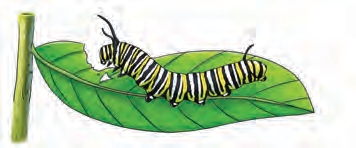
We will start off by looking at our home, planet Earth. It is the only planet we know that supports life, and it has an environment that we must protect. There is an amazing variety of life on Earth—plants and animals that have managed to survive and thrive in different regions on this planet. You might have seen a seed grow into a plant, a caterpillar transform into a beautiful butterfly and many more such observations. How do these plants and animals grow?
 A small green plant seedling growing out of soil.png)
 A cow nursing its calf in a grassy field.jpg)
Of course, to grow, we need food to eat, and especially in a large and diverse country like India, food is so fascinating. Across the country, we have different cuisines with their many tasty dishes. What are they made of? How do we find out?
 A plate with rotis, onions, and a bowl of green chutney.png)
 A thali with rice, dal, vegetables, and sliced onions.jpg)
 A South Indian meal served on a banana leaf with dosa, idlis, and sambar.jpg)
 A plate with a large portion of rice or grain-based dish accompanied by various side portions.png)
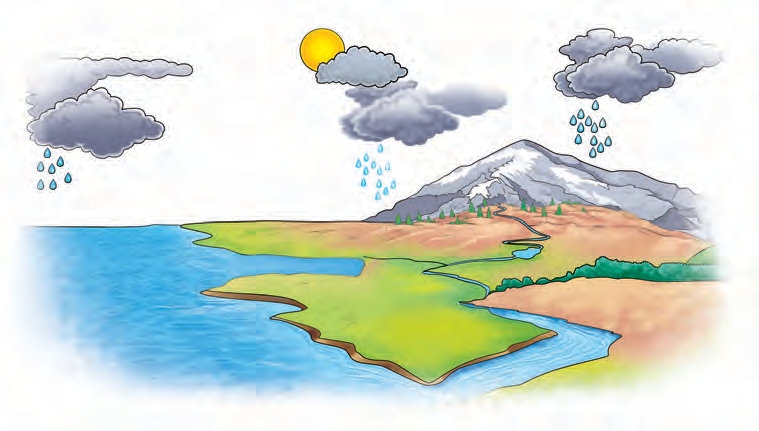
Along with food, we need water to survive. Water is such a delightful substance. Have you ever run and jumped in a puddle when it rained? Do you ever wonder why and how it rains?
Have you noticed that water freezes and becomes ice when we cool it and boils and becomes steam when we heat it? Do you enjoy drinking cool water in the summer or showering with warm water in the winter? How do we understand hot and cold? Whether it is water, or our own body when we have fever, finding out how hot something is can be important!
Then again, there are so many different things around us—the paper we write on, the metal key, the plastic ruler and the rubber eraser in our box, the magnet that keeps the box closed, the clothes we wear, the cup we drink milk in and so many other things. What are they made of? Are they made of different materials? How do we separate different materials from one another?
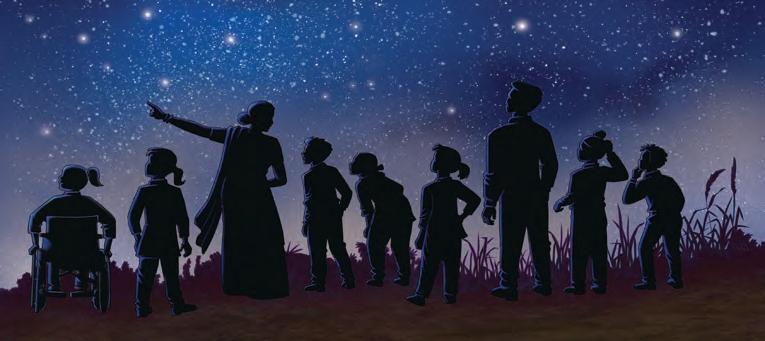
We will have an almost unending list of questions about everything on Earth as we further explore this book. But why limit our questions to the Earth alone? We can ask questions on things beyond—the Sun, the Moon, and the millions of stars that shine in the sky!
Whether you are learning about the structure of a leaf, discovering how things move, or separating the skin of a peanut seed, we hope each chapter of this book will ignite your spirit of inquiry. And hopefully you will have lots of questions in your mind!
Even though you may not realise it, you have already been finding answers to many of your questions. Suppose your pen stops writing. What would you do? You would ask yourself the question, "Why did my pen stop writing?". You might guess that the ink finished.
You would then test this guess by opening the pen and checking the ink refill. If it is empty, you would know that your guess was correct. But suppose you find that the ink was not finished. Now what would you do? You would make another guess—perhaps the ink might have dried up. To test if this guess is correct or not, you will try something else.

- •Write about a similar problem that you tried to solve.
- •What steps did you take?
 A pressure cooker on a gas stove spilling over — wondering why the dal spilled out.jpg)
 A person repairing a bicycle, checking the tyre tube in a basin of water to find a leak.png)
Scientists are people who follow the scientific method to solve problems or to discover new things. But anyone who follows the scientific method is working like a scientist. Someone cooking food may be wondering why the dal has spilled out of the cooker—was there too much water?
Think of a bicycle repair person trying to find out why a tyre is flat—from where did the air leak out? Or an electrician trying to find why a light bulb is not working—is there some problem with the bulb or the switch? When we try to ask questions and find out answers, in a way, we are all scientists!
- •Describe a daily life situation where you feel someone was following a scientific method.
Do you now realise that there are several daily life situations where we knowingly or unknowingly apply the scientific method? Though we all apply the scientific method to some extent, learning science will develop our capabilities for finding solutions to bigger problems and solving more mysteries of the universe. And to be able to learn science well, the first and foremost thing is to be curious and observe your surroundings keenly. And when we are curious, we start posing questions, asking how and why? Just remember, the world is full of things we do not know, things that are waiting to be explored.
- •If you have to ask "Why?" about something, what would you ask about?
- •Try to write down how you would attempt to find an answer to your question.
Science is rarely done alone. Scientists across the world work together, often in large teams. So, if you cannot find an answer yourself, ask your friends to help you out! It is always more fun to discover things together.
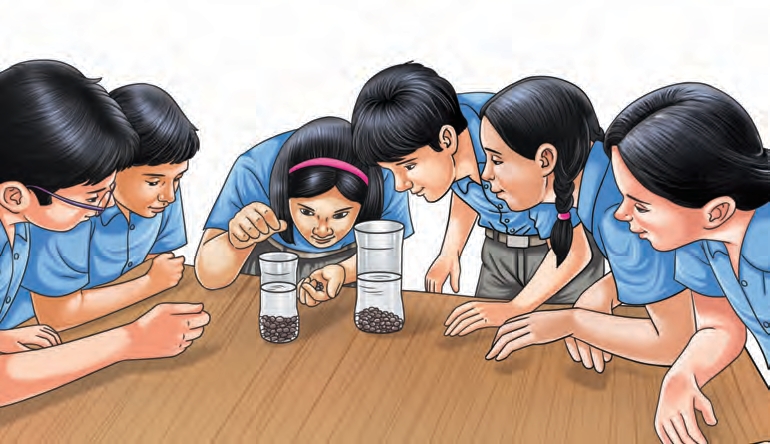
Of course, remember that you will not find answers to all your questions within Grade 6. Do not worry, you are embarking upon a journey of science for the next five years or even beyond!
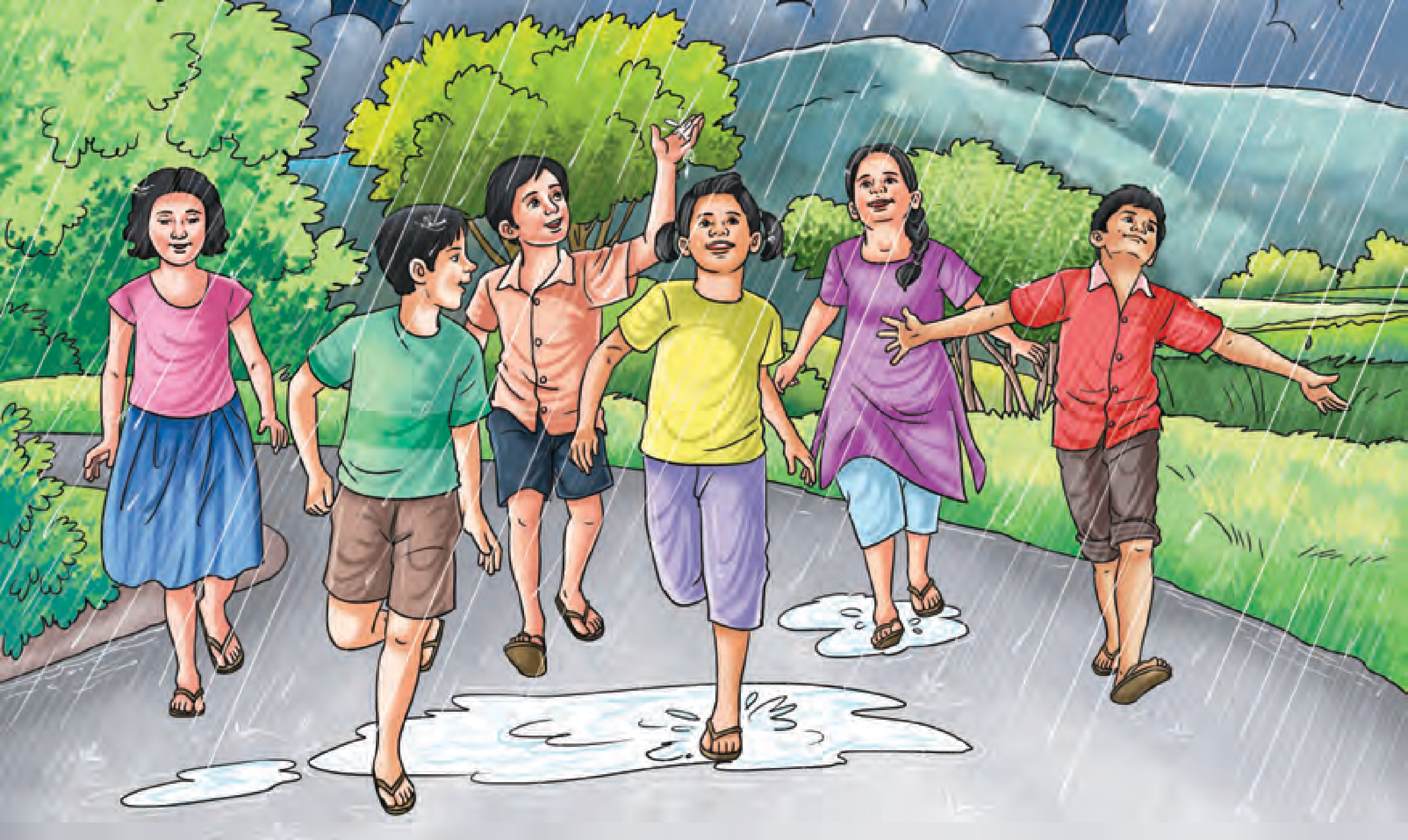
Much like children enjoying the rain, science is all about joyful exploration. Enjoy your scientific journey, keep exploring and never stop wondering about the amazing mysteries of the universe and asking questions.
Are you ready to embark upon the exciting journey of Science? Let us get started!!
Keywords
- 1Science is a way of thinking, observing and doing things to understand the world we live in and to uncover the secrets of the universe.
- 2Curiosity is the driving force behind scientific discovery—always ask questions and observe your surroundings keenly.
- 3Science is everywhere—from the depths of the ocean to the vastness of outer space, from the kitchen to the playground.
- 4Every new scientific discovery adds another piece to the giant puzzle of knowledge, and sometimes new discoveries change our earlier understanding.
- 5This book explores topics ranging from planet Earth and life on it, to food, water, materials, and the Sun, Moon, and stars.
- 6The scientific method involves observing, questioning, guessing a possible answer, testing the guess through experiments, and analysing the results.
- 7Anyone who follows the scientific method—whether a cook, a bicycle repair person, or an electrician—is working like a scientist.
- 8Science is rarely done alone; scientists across the world work together in teams, and collaborative discovery is always more fun.
- 9Learning science develops our capabilities for finding solutions to bigger problems and solving more mysteries of the universe.
- 10The journey of science is one of joyful exploration—never stop wondering and asking questions.