Reshma lives in a coastal town of Kerala and is very fond of writing short stories. Her grandmother loves listening to her stories, so Reshma was writing a new story to share with her grandmother on her 60th birthday.
The story was based on a ship carrying spices from Kerala for trade in the olden days. Reshma was aware that in those days, the sailors used stars to find directions at night. But in her story, a situation arose wherein the sailors got caught in a storm with an overcast sky and stars were not visible. Reshma could not take her story forward as she could not think of a way for sailors to find directions.
She searched for information on the internet and her school library. She learnt that the travellers used a device, known as a magnetic compass, for finding directions.
Reshma had seen pencil boxes and purses which had magnets to keep them closed. A writing board in her school also had a duster with a magnet. But she had never looked at those carefully. She now became curious to learn more about magnets and magnetic compasses.
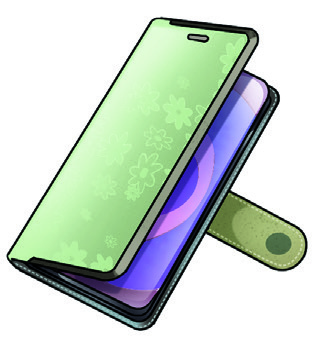
The magnets used by sailors in the olden days were based on naturally occurring magnets, known as lodestones which were discovered in ancient times. Later on, people found out that magnets could also be made from pieces of iron. Nowadays, we have magnets made of different materials. The magnets that you find in your school laboratory and those used in pencil boxes, stickers, toys are all artificial magnets. The magnets can be of various shapes.

Do magnets stick to objects made of certain materials only?
- •Collect a few objects made of different materials and also a magnet.
- •<strong>Predict</strong> which of the objects will stick to the magnet. Write your prediction in Table 4.1.
- •Now hold a magnet in your hand and bring it near the objects one by one. <strong>Observe</strong> which of the objects stick to the magnet.
- •<strong>Record</strong> your observations in Table 4.1.
Table 4.1: Identifying the materials attracted by a magnet
| Name of the object | Material | Prediction (Yes/No) | Observation (Yes/No) |
|---|---|---|---|
| Pencil | Wood | ||
| Eraser | Rubber | ||
| Paper clip | Iron | ||
| Pen | Plastic/Metal | ||
| Scissors | Metal | ||
| Glass tumbler | Glass | ||
| Key | Iron | ||
| Nails | Iron | ||
| Sharpener | Metal | ||
| Ruler | Plastic/Wood |
Was your prediction correct for all objects? Which materials stuck to the magnet? What conclusion can you draw?
Which materials listed in Table 4.1 were found to be non-magnetic?
- •Spread some iron filings (very small pieces of iron) on a sheet of paper.
- •Place a bar magnet over them. Tap the paper and observe carefully what happens to the iron filings.
Do you observe anything special about the way they stick to the magnet? Do the iron filings stick all over the magnet uniformly? Or do the iron filings stick more at some places?
We find that maximum iron filings stick near the ends of the bar magnet, while a very few iron filings stick at the remaining part of the magnet.
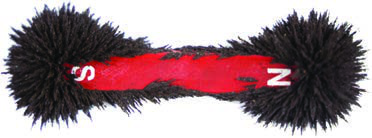
It is not possible to obtain a magnet with a single pole. If a magnet is broken into smaller pieces, North and South poles always exist in pairs even in the smallest piece of the magnet. A single North pole or a South pole cannot exist.
Can we find a magnet with a single pole?
- •Suspend a bar magnet with a thread tied to the middle of the magnet. You may need to adjust the position of the string till the magnet is balanced horizontally.
- •Now rotate the magnet gently in the horizontal direction and let it come to rest.
- •Mark the position corresponding to the ends of the magnet on the ground (or on a piece of paper stuck to the ground). Join these two points on the ground with a line. This line indicates the direction along which the magnet comes to rest.
- •Now again rotate the magnet by giving a gentle push at its one end and wait till it comes to rest. Does the magnet rest along the same line?

What direction does this line indicate along which the magnet rests? How can we find it out?
If we have noticed the direction where the Sun rises or sets, we have an approximate idea of where East or West is. Hence, we can locate the direction along which the magnet rests.
Repeat this activity with a small iron bar in place of the bar magnet. What do you observe? Does it always rest along north-south direction? It does not. It can rest along any direction. This implies that only magnets rest along north-south direction. This activity provides us with a way to test whether a piece of metal is a magnet or not.
The compass is kept at the place where we wish to know the directions. After some time, the needle comes to rest in the north-south direction. The compass box is then gently rotated until the north and south marked on the dial are aligned with the needle. Now all directions at that place are as indicated on the dial.
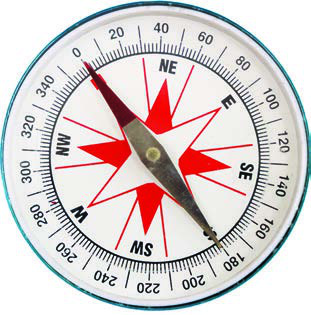
How can we make our own magnetic compass?
- •Collect a few materials like a cork piece, iron sewing needle, a permanent bar magnet, a glass bowl, and water.
- •Place the iron sewing needle on a wooden table. Then keep any one pole of the magnet at one end of the needle. Move the magnet over the needle along its length. When it reaches the other end of the needle, lift it up.
- •Bring the same pole of the magnet you started with to the same end of the sewing needle from which you began, and repeat the previous step. Repeat this process at least 30 to 40 times.
- •Bring some iron filings or steel pins near the needle. If the pins or iron filings get attracted to the needle, then that means that the needle has become a magnet.
- •Pass this needle through the cork horizontally. Float the cork in a glass bowl filled with water, such that the needle always remains above the level of water.
- •When the needle comes to rest, your magnetic compass is ready for use. Note the direction in which either side of the needle points.
- •Rotate the cork gently and wait till it stops rotating. Repeat this a few more times. Do the ends of the needle always point in the same direction?
What happens when we bring two magnets closer to each other?
- •Take a pair of bar magnets on which North and South poles have been marked. Mark the two bar magnets as A and B.
- •Place the longer side of magnet A over 5–6 round shaped pencils.
- •Now bring one end of magnet B near the end of magnet A placed on the pencils. Make sure that the two magnets do not touch each other. Observe what happens.
- •Next, bring the other end of magnet B near the same end of magnet A. Does the magnet A on the pencils begin to move? Does it always move in the direction of the approaching magnet? What do these observations suggest?
- •Repeat the activity by using an iron bar in place of one of the magnets. What do you observe this time? You will find that both the ends of the iron bar will be attracted by both the North and South poles of the magnet.
 Like poles repel (S near S).jpeg)
 Unlike poles attract (N near S).jpeg)
- •Take a magnetic compass and a bar magnet.
- •Place the magnetic compass over a horizontal surface and wait for its needle to come to rest.
- •Now slowly bring North pole of the bar magnet close to the North pole of the compass needle. Observe the compass needle carefully. What do you observe? Does the needle deflect? If yes, in which direction?
- •Now repeat the above step with the South pole of the bar magnet. Do you observe any difference this time?
The compass needle is also a magnet. Will it show the same behaviour if a magnet is brought closer to it?
 North pole faces North of compass.jpeg)
 South pole faces North of compass.jpeg)
When the North pole of a magnet is brought closer to the North pole of the compass needle, it moves away. When the South pole of the magnet is brought closer to the North pole of the compass needle, it moves closer.
Suppose we place a piece of wood between the compass needle and the magnet. Will this affect the deflection of the compass needle?
- •Repeat the first or second part of Activity 4.6.
- •Without disturbing the bar magnet and magnetic compass, place a piece of wood between them, perpendicular to the table. Observe the compass needle carefully.
- •Record your observation in Table 4.2.
- •Repeat the process by replacing the piece of wood by a cardboard sheet, thin plastic sheet, and a thin glass sheet.
Table 4.2: Observing the effect of magnet through non-magnetic materials
| S. No. | Material placed between the magnet and the compass needle | Observations |
|---|---|---|
| 1 | Wood | |
| 2 | Cardboard | |
| 3 | Plastic | |
| 4 | Glass |
After learning about magnets, Reshma was very excited and decided to set up some fun activities using magnets at her school fair. You may try making these yourself and may also think of some more fun ideas.
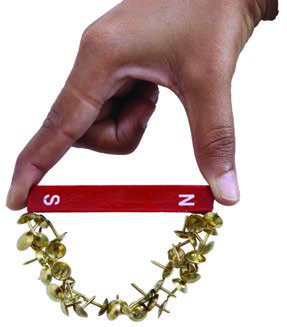
Can we make a garland? Magnets can move some objects without touching them! Is that not amazing?
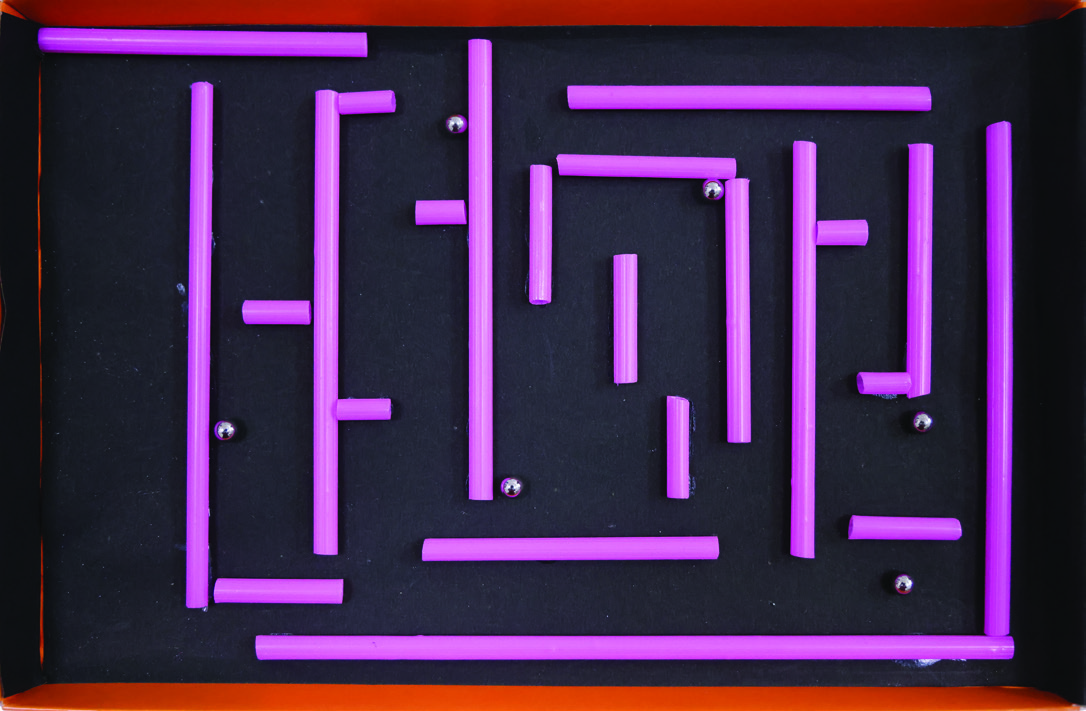
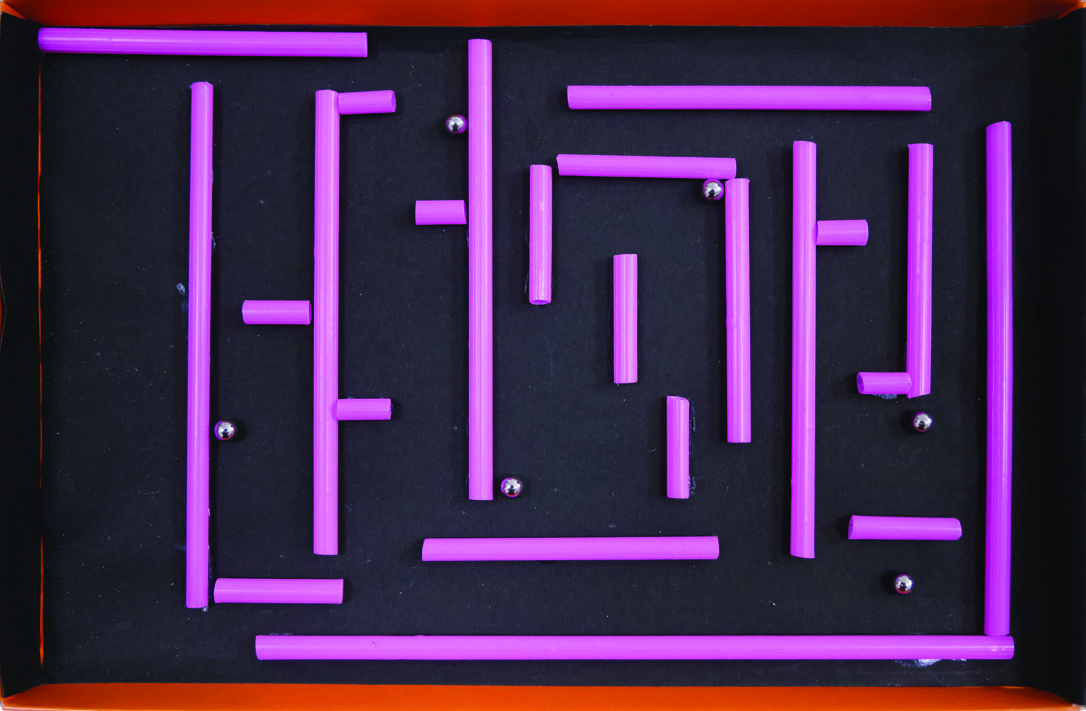
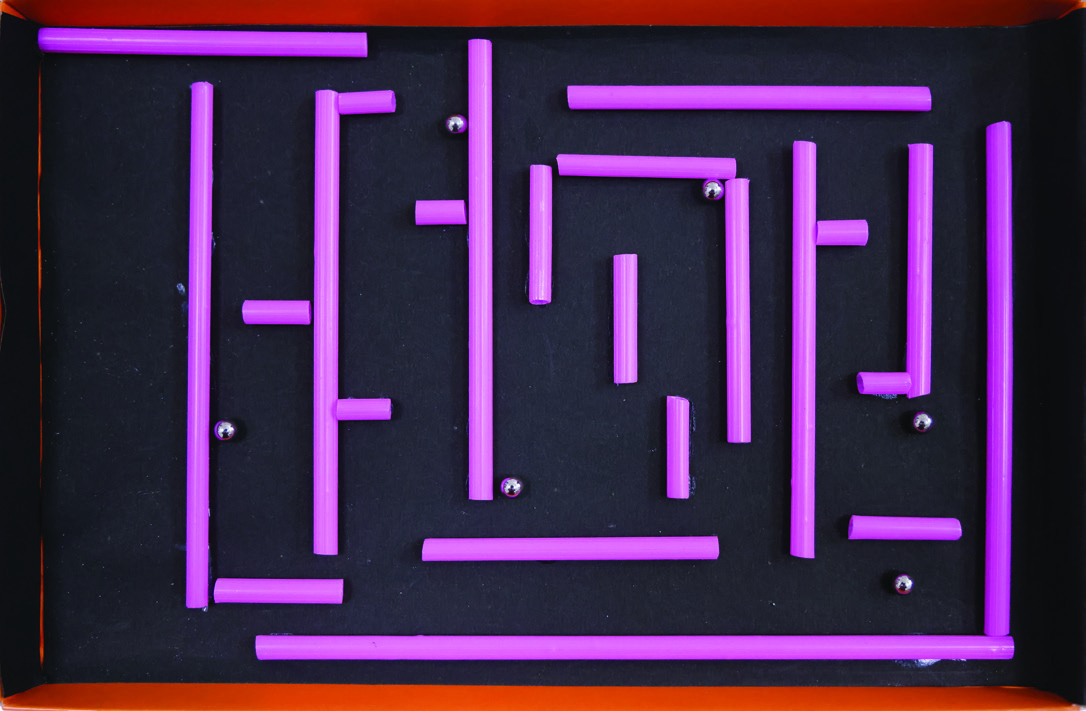
Can we take the steel balls out of the maze by moving a magnet below the cardboard tray?
Can we pick out a steel paper clip fallen in water using a magnet, without making our fingers or the magnet wet?
Will the two cars speed towards each other or run away from each other when brought closer?
- Store magnets in pairs with unlike poles facing each other
- Keep a piece of wood between paired magnets
- Place soft iron pieces across the ends
- Do not heat magnets
- Do not drop or hammer magnets
- Keep away from mobile phones and remote controls
Have fun, but treat magnets with care.
Keywords
- 1A magnet has two poles—the North pole and the South pole.
- 2The poles of a magnet always exist in pairs. A single North pole or a single South pole cannot exist.
- 3Magnetic materials are the materials that are attracted towards a magnet.
- 4Non-magnetic materials are the materials that are not attracted towards a magnet.
- 5A freely suspended magnet rests along the north-south direction.
- 6The needle of a magnetic compass indicates the north-south direction.
- 7When two magnets are brought close to each other, like poles (North-North, South-South) repel each other while unlike poles (North-South) attract each other.
- 8A magnet can be identified by its property of repulsion.
- 9The magnetic effect can act through non-magnetic materials.
- Using 3–4 different magnets, try to lift steel pins or U-clips and check which magnet picks up the largest number of pins. Discuss with your friends why different magnets might have picked up different numbers of pins.
- Make a toy 'Hopping Frog' as a combined class activity with the help of your teacher. For constructing the toy, fix ring magnets in an alternate North-South fashion along the length of a scale using glue. Paint a frog on paper, cut along the outline and glue a ring magnet at its base. Take a transparent, flexible plastic strip of a smaller size and glue it to the ring magnet which is attached to the frog. When you slide the plastic strip (with frog) over the scale with magnets, you can observe the frog hopping.
- Find out about the Maglev Train and try to make its model.
- Try to find out why there is a need to make magnets of different shapes.
- Collect information related to the use of magnets in the field of medicine.